






How to Choose the Right Computerized Coaxial Cable Stripping Machine for Your Business
 Aug 12, 2026|
 View:398
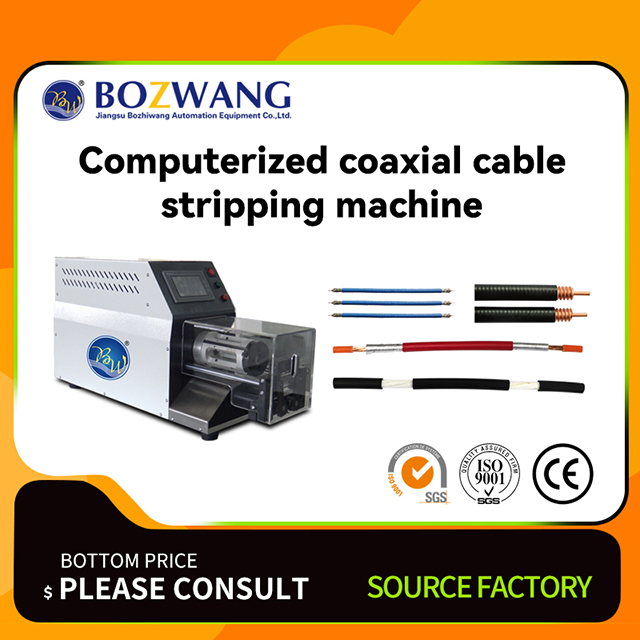
Picking the best coaxial cable stripping machine requires clear technical metrics. You must check the wire outer diameter range, layer capability, depth precision control, and daily production output. Modern uses like RF communications, advanced medical equipment, and new-energy automotive harnesses need complete accuracy. Unsteady manual stripping methods often nick delicate conductor strands or tear soft insulation. Upgrading to a computerized rotary coaxial cable stripping machine replaces thermal tools and protects sensitive dielectric materials. Installing the right cable stripper for coaxial cables ensures clean cuts across every multi-layer design. You boost daily shop floor productivity, cut expensive material waste, and improve overall harness assembly quality.
Key Takeaways
Automatic spinning blades move in tiny steps of 0.01 mm to keep fragile inner wires safe.
Touchscreen systems save 500 job settings for quick, tool-free setup changes.
Self-adjusting clamps grip wires firmly so they do not shake or strip unevenly.
Connected automatic processing systems create lots of finished products and pay for the coaxial cable stripping machine costs fast.
Checking the blades often and setting their depth correctly stops you from wasting expensive materials and losing working time.
Technical Criteria for Coaxial Cable Strippers
You must match coaxial cable stripping machine features to your wire sizes before buying any equipment. Picking the right setup keeps your work quality steady and protects fragile metal shielding every day.
Processing Diameter and Layer Capabilities
You should check the actual sizes of your wire projects before choosing a coaxial cable stripping machine. Systems handle different wire sizes based on their frame build and motor power. Standard units process small micro-coax lines for gadgets alongside thick power lines.
Model | Outer Diameter Range |
|---|---|
EW-1105 | 0.1 - 6.5 mm |
SR-5806 | 0.8 - 7 mm |
EW-0640 | 2 - 23 mm |
A quality coaxial cable has several insulated layers around one main wire core. Small units strip tiny lines up to 6.5 mm wide across 5 layers. Heavy-duty smart systems handle thick cables up to 25 mm wide across 9 layers. Modern tools remove the need for manual blade swaps during complex shop runs.
Rotary Cutter Frame: Multi-Layer Stripping Without Cutter Changes – The EW-06F uses a motor-driven rotary cutter frame that allows processing up to 9 sequential layers without swapping cutters between layers.
You can process basic rg6 lines and custom shielded wires on one automated coaxial cable stripping machine easily. Updating job settings on the screen adjusts the blade depth right away. You strip every wire layer neatly without stopping work to change tools by hand.
A multi-point radial clamping structure enables automatic centering and clamping of cables of different diameters, avoiding uneven processing or damage to the inner core caused by cable eccentricity. The multi-point evenly distributed claws provide a uniform clamping force distribution, which effectively suppresses vibration and torsional displacement when the coaxial cable stripping machine rotates at high speed.
The auto-centering clamp holds the coaxial cable tight along its middle line during work. The multi-point arms stop wire shaking when spinning at high speeds. This steady grip keeps wire layers round and prevents inner core damage on every job.
Rotary Blade Precision and Cutting Depth
Smart processing tools use motor-driven spinning blades to slice outer jackets, metal shields, and plastic cores smoothly. Top-grade imported tungsten steel blades make sharp cuts without leaving rough edges or fraying soft wire insulation.
Depth setting control step: 0.01mm
Width adjustment steps: 0.01mm
Overall cut precision: ±0.5MM + total length * 1‰
Exact depth control prevents expensive harm to delicate inside copper wires. You can set blade depth values in small 0.01 mm steps using simple digital screens. This fine control lets you handle delicate rg6 signal wires and tiny micro-coax parts safely.
High-precision wire processing machines boost your total shop productivity by a large amount. Reliable servo motors guide blade path smoothly through every coaxial wire design. You get high matching accuracy without scratching center wires or ripping delicate foil shields. Correct setup keeps wire ends neat for easy connector assembly later. Buying coaxial cable stripping machines with tiny depth adjustment steps improves final product quality for your business while upgrading your production line.
Software Control and Compression Tool Integration
Program Memory and Recipe Management
Modern cable processing machines use high-resolution touchscreens to make daily shop tasks much easier. You can enter exact cut depths, strip lengths, and motor speeds directly into the digital screen. Computerized control eliminates human measuring mistakes on tough wiring jobs. Operators quickly set up multi-layer stripping steps without using any hand tools. This smart system saves you valuable setup time on every job run.
Intuitive touchscreen HMI enables rapid job changeover and can store and recall over 500 wire programs.
You can open saved processing steps for specific wire sizes with just one simple touch. Switching from a heavy power line to a standard rg6 cable takes only seconds. The system software saves exact depth settings for every single wire layer. This easy program memory ensures matching results across different worker shifts. Managers store common job recipes directly on the coaxial cable stripping machine's internal memory. You get identical product quality across big orders without re-entering numbers.
Integration with Compression Tool Systems
Clean cable processing directly supports your next harness assembly steps. Precise spinning blades cut neat conductor ends without fraying aluminum shields or ripping inner insulation. You can move processed cable batches directly to secondary benchtop work spots. Smooth cable ends allow easy wire insertion into tight terminal sockets. Fast automated cutting and stripping steps prepare every cable for quick connector installation.
Proper wire prep helps you get solid electrical contact during final connection steps. A clean cable edge slides smoothly into a high-spec FAKRA or HSD connector without snagging wire strands. Operators then attach each compression part using a matching compression tool setup. The right compression tool applies even pressure around the outer connector sleeve. Secure cable attachment prevents signal loss and physical breaks in car signal networks. Using a matched compression tool protects delicate inner signal paths. Smooth follow-up work creates strong compression connector joints on every cable run.
Machine Types Across Production Scales
You must choose the right coaxial cable stripping machine class to match your facility's output targets. Production scale determines whether compact standalone units or fully integrated processing lines will serve your operations best.
Benchtop Units for Medium-Volume Runs
Benchtop processing units offer excellent flexibility for small to medium manufacturing runs. You can place these compact machines directly on standard assembly workbenches. Operators easily configure parameter settings for low-volume orders. Compact units handle various wire types, including standard rg6 lines, with short setup times.
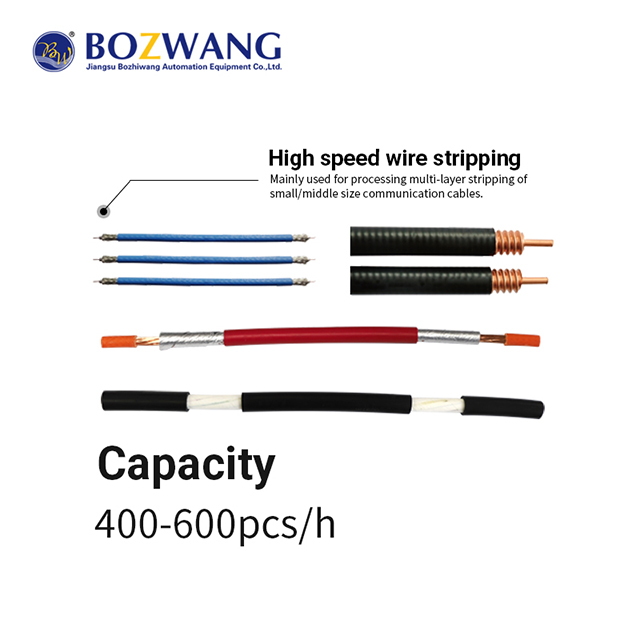
Bozhiwang benchtop models efficiently strip cables with outer diameters up to 6.5 mm across 5 distinct layers. These coaxial cable stripping machines deliver production speeds from 300 to 800 pieces per hour. You gain high rotary precision without taking up valuable floor space. Compact units suit shops that rebuild harness configurations frequently throughout the day.
Metric | Manual Benchtop | Fully Automated Inline |
|---|---|---|
Throughput (pcs/hr) | 50–100 | 600–3,000 |
Labor cost per hour | $15–25 | $3–5 |
Annual total cost (at 3,000 units/day) | $84,230 | $11,480 |
Payback period for $25,000 machine | N/A | 6–9 weeks |
Fully Automated Inline Processing Systems
High-volume factory floors require automated inline cable systems to maximize daily yield. These automated setups complete continuous cutting and stripping operations without manual handling between steps. You connect pre-feeders, take-up conveyors, inkjet printers, and barcode scanners directly to the main unit. Integrated accessories streamline secondary assembly processes like terminal crimping.
Feed Unit | Max Diameter (mm) | Max Speed (m/s) |
|---|---|---|
Linear feed unit | 7.0 | 2.5 |
Belt drive | 5.5 | 5.0 |
Inline systems deliver outstanding efficiency for complex multi-layer coaxial cable designs. The system reduces job preparation time by 50% and slashes rework by 80%.
Contactless processing eliminates nicking and insulation melting
Sub-millimeter accuracy ensures consistent, precise stripping
No compromise to shielding or internal conductors
Enhanced cleanliness and reduced variability in high-volume runs
An automated coaxial setup achieves high production consistency while driving down labor expenses. High-speed systems ensure full payback for a $25,000 machine within 6 to 9 weeks. You maintain precise control over every multi-layer coaxial cable, ensuring optimal signal conductivity for demanding automotive and communication applications.
Evaluating Operational ROI and Maintenance
Calculating Efficiency and Waste Reduction
You calculate the total return on investment by comparing initial machine costs directly against long-term shop savings. Buying automated stripping tools lowers worker labor costs and cuts factory energy use by a large amount. You also reduce long-term tool expenses during big high-volume job runs. Plant managers track machine downtime, worker skill levels, and repeat job orders to test tool reliability over time. These combined financial facts shorten your payback period, improve long-term cash value, and raise daily operating profits across every work shift.
Exact cable processing tools protect costly wire stock and raise your total finished harness output. Hand wire stripping leads to uneven cuts, high material waste, and frequent broken connection parts. A small 0.5 mm depth error at the shield layer leaves delicate insulation open to severe damage and dirt. Likewise, bad cutting depths nick main wire cores and stop smooth connector fits during later work steps. Smart depth control with fine 0.01 mm precision prevents operator mistakes and stops wasteful wire scrapping on every coaxial cable.
Blade Care and Calibration Best Practices
Good blade care protects your initial machinery investment and keeps daily factory production output high. You should check high-grade imported tungsten steel blades often for small signs of outer edge wear. Sharp cutting tools make clean cuts and strips without pulling or tearing fragile metal shield strands. Clean blade edges protect internal plastic insulation layers on every single processed wire. Built-in waste vacuums remove leftover insulation scraps to keep spinning cutter areas totally clean and safe.
Regular system calibration guarantees steady cut depth across different wire batch sizes. You must check multi-point auto-centering clamp parts often to stop core off-center issues during fast spinning tasks. Planned tune-up checks prevent sudden machine breakdowns and lower your overall tool repair expenses over time. Workers save maintenance logs and calibration steps directly into the digital touch screen memory. Steady daily checks ensure top-quality control on every wire job, extending your complete cable processing system lifespan.
Choosing a smart coaxial cable stripper raises factory output and lowers labor costs. Accurate spinning blades slice every wire layer cleanly. Simple software saves your settings for quick daily job switches.
Buying managers should request sample tests with their specific cable types and sizes before ordering new coaxial cable stripping machines. Testing proves exact cut accuracy on your real wire stock.
Buying certified coaxial cable stripping machines like ISO-approved Bozhiwang units ensures great long-term value for growing wire processing setups.
Dependable equipment protects your costly wire inventory, boosts shop output, and guarantees steady quality across every single production run.
FAQ
How many layers can a computerized coaxial cable stripping machine process?
Modern automated coaxial cable stripping machines can peel up to 9 layers in a row without changing blades by hand. Strong tungsten steel spinning blades make exact cuts on complex cables. You just pick a saved program on the touch screen to change cutting settings right away.
What cable diameter ranges do these machines handle?
Different coaxial cable stripping machine models handle cable widths from under 6.5 mm all the way up to 25 mm across. Automatic centering clamps hold every cable tightly right in the middle. This stops inner core damage whether you work on tiny signal wires or standard rg6 cables.
What accuracy level can you expect from rotary blade depth controls?
Smart systems let you change cutting depth by tiny 0.01 mm steps. High precision keeps the inner metal wire and soft insulation safe from cuts. You keep accurate quality control while making 300 to 800 finished parts every hour.
How do stored job recipes speed up job changeovers?
Digital touch screens save over 500 cable processing setups inside the coaxial cable stripping machine memory. You load saved strip lengths and blade depths with one fast tap. This handy feature stops worker measuring mistakes and cuts setup time during daily job changes.


View More(Total0)Comment lists