




BOZWANG's Ultrasonic Wire Harness Welding Machine Powering New Energy Vehicle Lines
 Oct 29, 2026|
 View:2
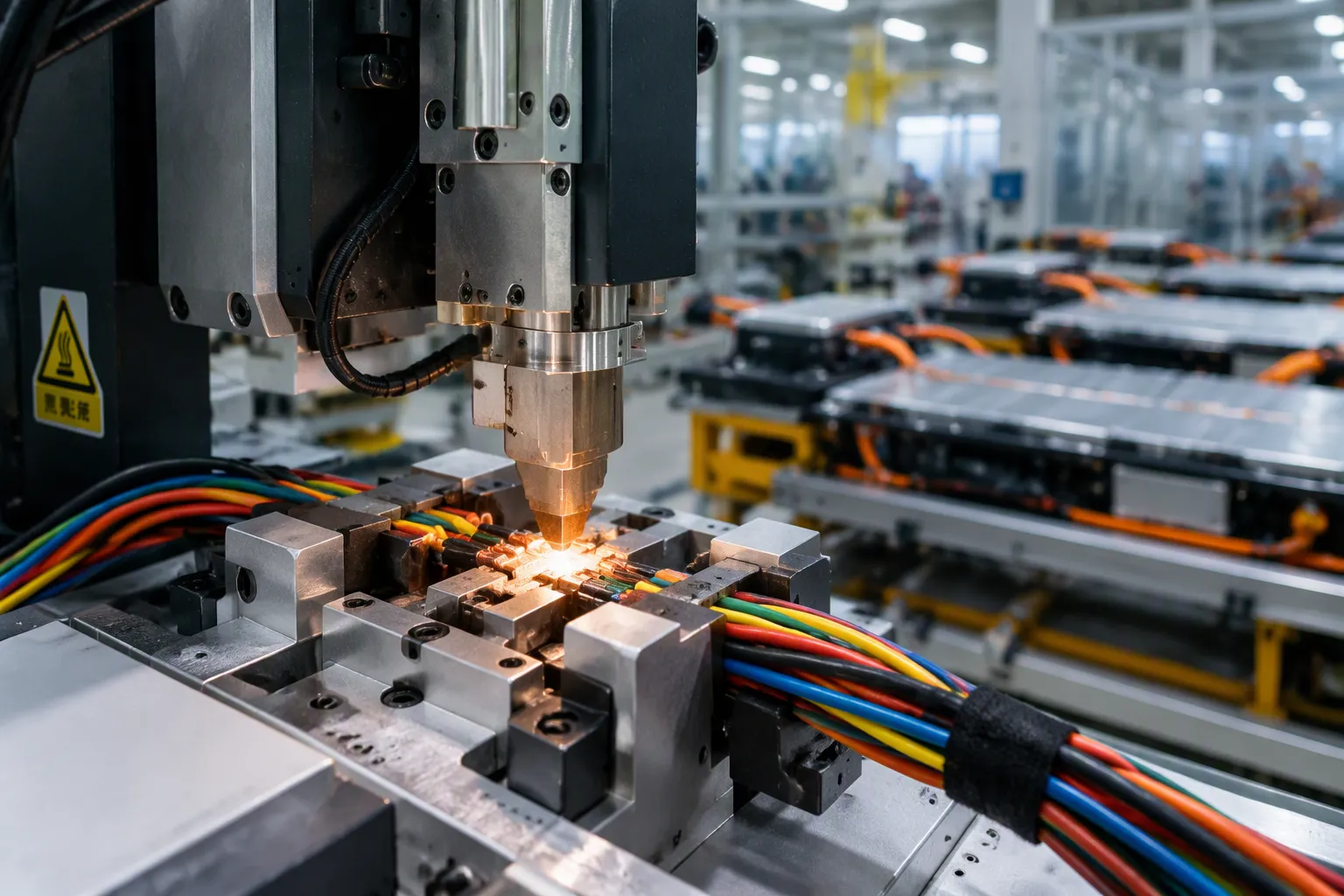
Jiangsu Bozhiwang Automation Equipment Co., Ltd (BOZWANG) makes its ultrasonic wire harness welding machine to meet new energy vehicle (NEV) line needs. The machine joins copper harness wires using sound energy, not extra material.
Engineers and buying managers judge this machine on four points. Performance covers weld quality, speed, and reliability. Application fit covers copper and aluminum compatibility and high-voltage harness layouts. Compliance covers electrical safety, process validation, and traceability. Cost covers total cost of ownership, throughput, and downtime.
Each point connects to a measurable result on the line. BOZWANG's ultrasonic wire harness welding machine handles all four in one production platform.
Key Takeaways
Ultrasonic welding makes strong copper joints with low resistance, and it does not need extra materials.
The machine welds quickly and dependably, and it fits easily into automated production lines.
It works with both copper and aluminum, so it fits many new energy vehicle harness designs.
Safety rules and tracking records make sure the work meets industry standards.
Using less material and having less downtime lower the total cost over the machine's life.
Ultrasonic Wire Harness Welding Machine Performance
Weld Quality and Consistency
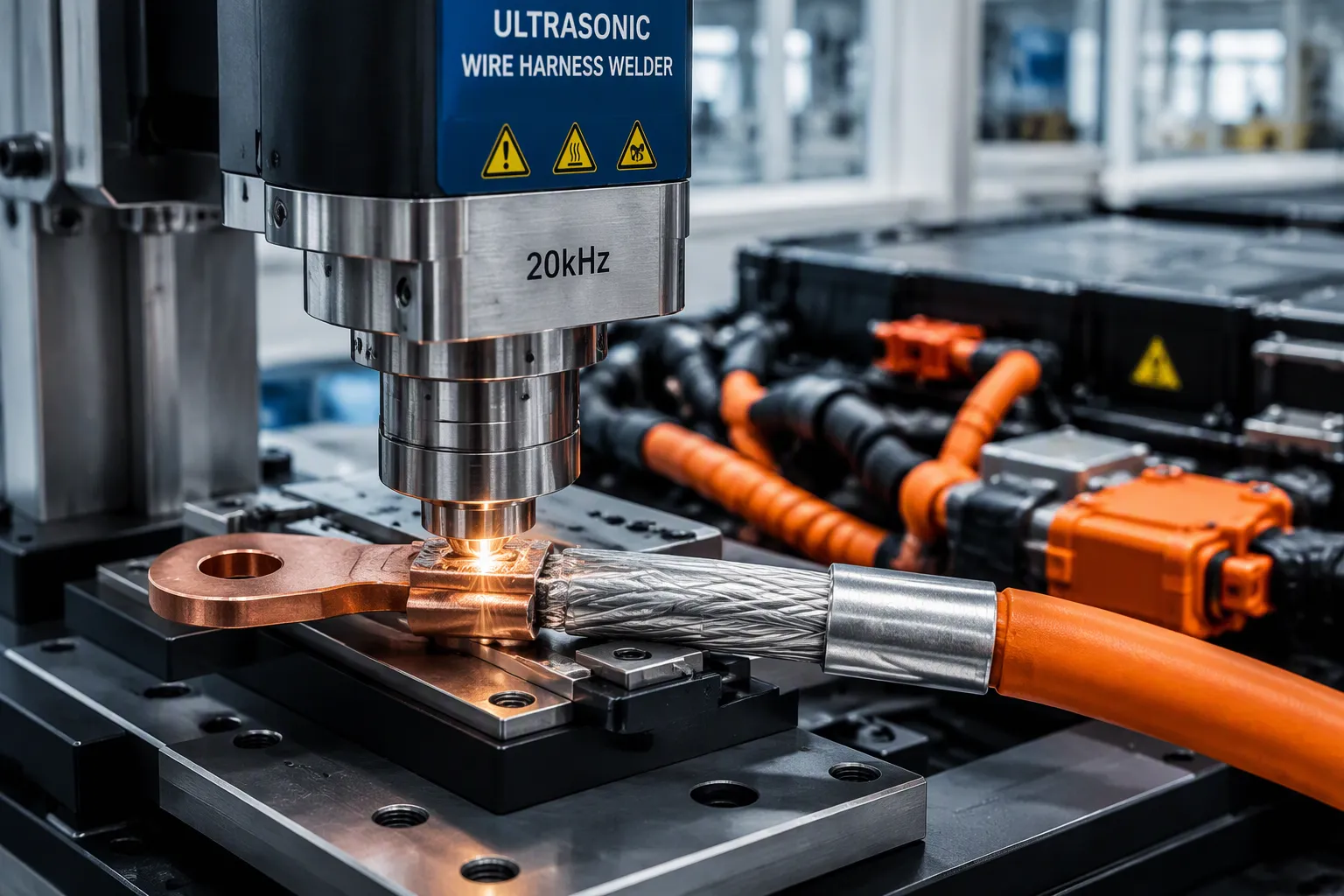
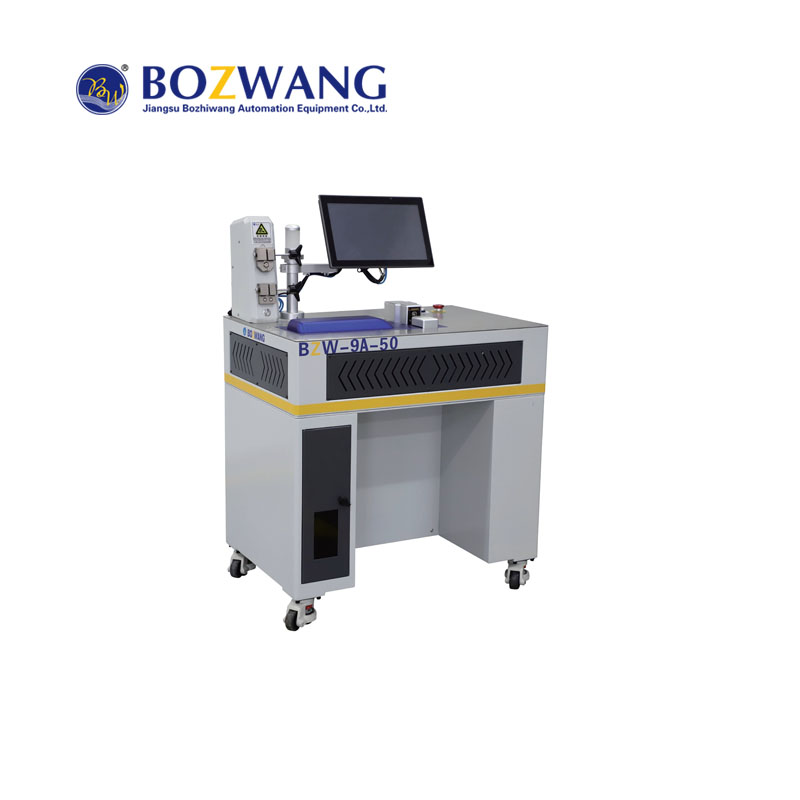
The BZW-9A is the main example of strong performance. It welds copper from 0.75 to 20 mm² and gives a maximum power of 3000 W at 20 kHz. The machine does copper-to-copper docking and parallel welding. Its design uses acoustics, mechanics, and polymer science to control the bond at the interface.
Weld quality begins with the join itself. The process adds no extra material. High-frequency vibration under pressure breaks the oxide layer and fuses strands at the molecular level. The result is a solid copper bond that takes the place of crimping and tinning. A clean, even joint with no melting or filler lowers variation across the run.
The numbers back up the claim. Ultrasonic joints in NEV harnesses show initial contact resistance of about 1–3 μΩ, compared with 10–20 μΩ for crimping. They keep steady tensile strength through long-term vibration testing. Performance stays stable after about 10,000 thermal cycles, while crimped joints may see resistance rise after 2,000–3,000 cycles. Low contact resistance keeps current flow clean in high-current circuits. The gas-tight, oxidation-resistant bond removes failure risks such as connector oxidation, thermal cycling degradation, and mechanical fatigue.
The BZW-9A-02 portable unit brings the same principle to flexible or field-adjacent work. It covers 0.5–10 mm², runs at 2000 W and 20 kHz, and works within 0.1–0.6 MPa of pressure. At 33 kg, crews can move it between stations with ease.
Speed and Reliability
Cycle time matters on a high-volume NEV line. In an experimental study on 20 mm² copper cable, welding time was 1600 ms, or 1.6 seconds, at 0.55 MPa pressure and full vibration amplitude. Similar equipment handles 0.5–20 mm² with welding time adjustable between 0.3 and 2 seconds, depending on wire size and application. The Ultrasonic Wire Harness Welding Machine completes welds in milliseconds to seconds and fits easily into automated production lines.
Reliability comes from repeatability. Metal welding runs at room temperature, so no heat-affected zones disturb material properties. Even pressure and properly stripped, oxide-free wires keep the bond balanced for multi-wire welds. In automated settings, the process can complete thousands of cycles per hour while holding repeatable weld quality. Once set up, the Ultrasonic Wire Harness Welding Machine is fast, repeatable, and easy to automate. That mix suits high-volume production where consistency and speed are priorities.
Fit for NEV Harness Designs
Copper and Aluminum Compatibility
NEV harness designs mix copper and aluminum for good reasons. Aluminum cuts weight and cost. Copper delivers conductivity and mechanical strength. The BZW-9B and BZW-9C terminal welding machines handle cable-to-terminal connections in both metals with reliable, high-precision results. Each unit brings the same solid-state principle to the terminal interface.
Copper-to-aluminum joining still demands care. The two metals differ in thermal expansion: copper at 16.5 μm/m·K and aluminum at 23.1 μm/m·K. That gap creates leftover stress as the joint cools, and it can start cracks at the interface. Aluminum oxide is stubborn and stable, so it blocks metallic bonding until ultrasonic scrubbing breaks it up. Diffusion between the metals also forms brittle intermetallic compounds such as CuAl2 and CuAl. These phases are hard but not very ductile, and they weaken joint strength. The melting point gap — copper at 1085°C and aluminum at 660°C — leaves a narrow processing window. Too much heat melts aluminum too early; too little heat stops atomic diffusion.
Challenge | Mechanism |
|---|---|
Thermal expansion mismatch | Leftover stress during cooling starts cracks at the interface |
Oxide formation | Aluminum oxide blocks bonding until ultrasonic scrubbing breaks it up |
Brittle intermetallics | CuAl2 and CuAl phases lower ductility and joint strength |
Temperature control | Narrow window between aluminum and copper melting points |
Ultrasonic welding controls these risks through low heat input and precise pressure. The Ultrasonic Wire Harness Welding Machine keeps the interface below bulk melting, so intermetallic growth stays limited and joint deformation stays tight. That control protects battery tabs and other dimensionally precise parts.
High-Voltage Harness Architectures
High-voltage NEV harnesses carry demanding electrical loads. Battery harnesses withstand up to 1500V and carry 20A to 500A. MCU, PTC, AC, DC-DC, and drive motor harnesses also rate at 1500V with 20A to 300A. Fast and slow charge harnesses rate at 1000V and 200A. System voltages span 48V, 72V, 400V, and 800V platforms. Compact layouts must route these circuits through tight spaces while separating high-voltage runs from low-voltage and control harnesses.
Material-free ultrasonic joins suit these architectures well. The process adds no solder, sleeve, or terminal barrel. A finished splice has a flatter, denser profile than a manual splice bundle. That smaller footprint helps branch circuits, battery leads, and compact subassemblies where enclosure clearance is tight. The joint also removes flux management, solder volume variation, and heat migration into the conductor. Compared with a crimped parallel splice, it can reduce joint bulk and eliminate one purchased component. Low resistance at the joint limits localized heating, and the solid bond supports reliable power transmission once the design is validated.
Safety and Standards Compliance
Electrical and Mechanical Safety
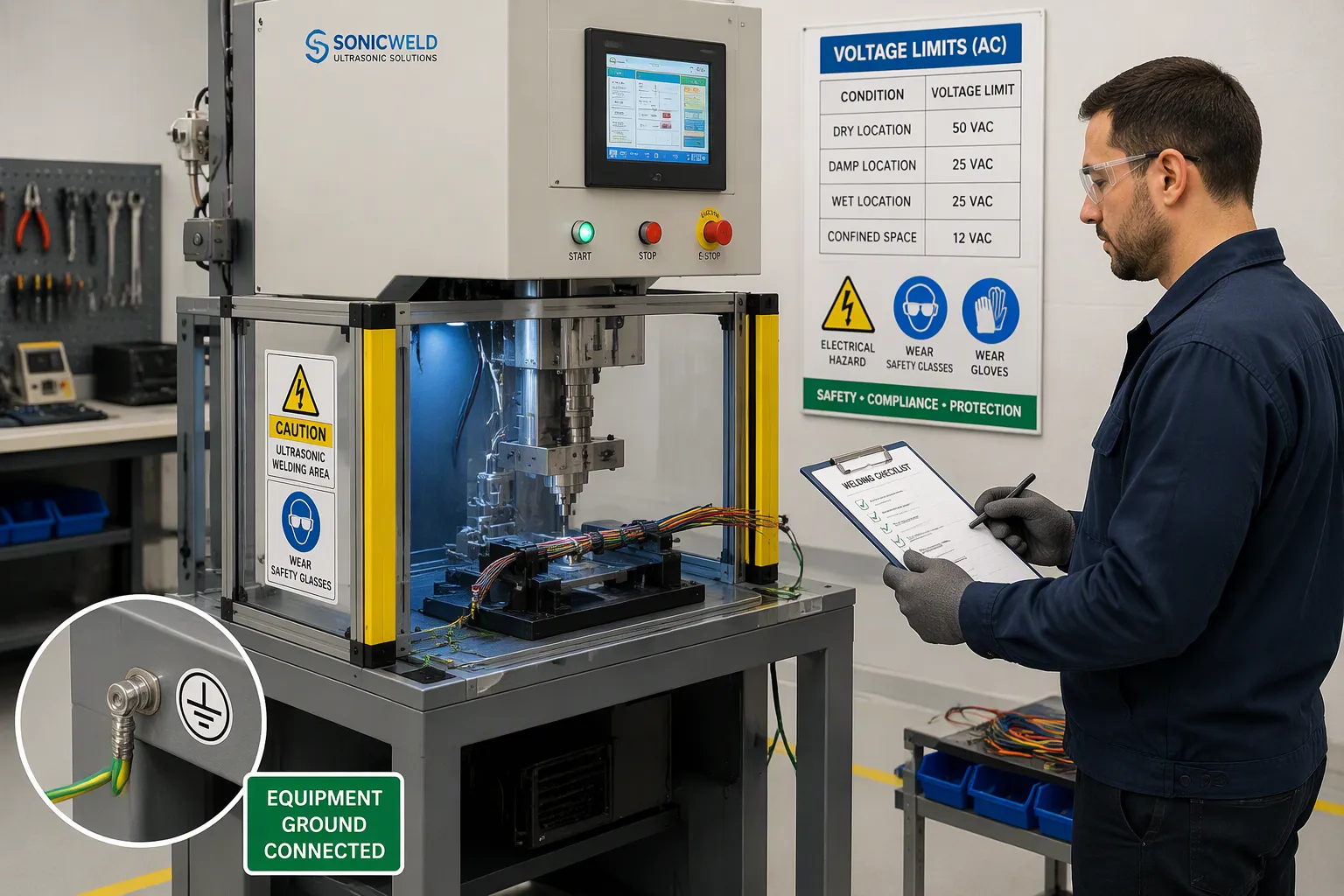
Ultrasonic welding uses electrical power and mechanical pressure at the same time. Operators and maintenance staff need clear safety rules for both. OSHA 29 CFR 1910.252 sets the federal baseline for welding safety in U.S. industrial settings, and it applies to automotive manufacturing operations.
OSHA 29 CFR 1910.252 (Welding, Cutting, and Brazing) requires that live electrical parts be guarded, insulated, or de-energized before servicing — the primary federal regulation governing welding safety in U.S. industrial environments, applicable to automotive manufacturing welding operations.
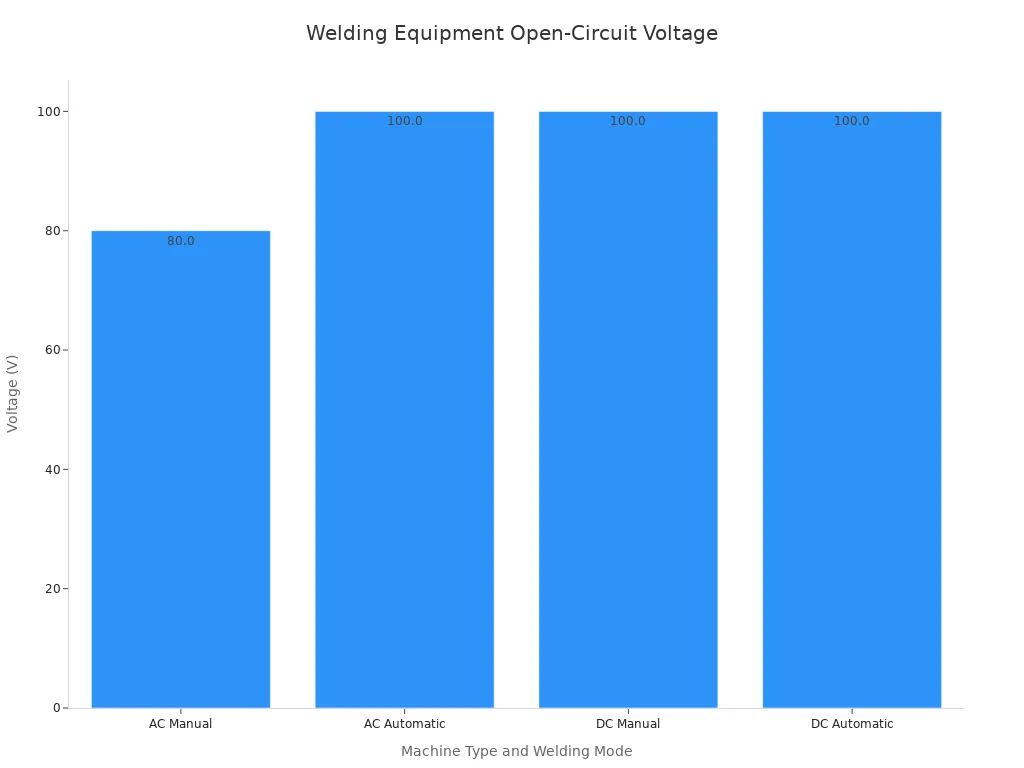
Open-circuit voltage limits depend on the machine type and welding mode. The table below shows the maximum values.
Machine Type | Welding Mode | Max Open-Circuit Voltage |
|---|---|---|
Alternating-current (AC) | Manual arc welding/cutting | 80 V |
Alternating-current (AC) | Automatic (machine/mechanized) | 100 V |
Direct-current (DC) | Manual arc welding/cutting | 100 V |
Direct-current (DC) | Automatic (machine/mechanized) | 100 V |
Grounding keeps the operator safe. The machine frame must connect to ground per subpart S. Chains, wire ropes, cranes, and elevators must never carry welding current. Crews check cables and connections before each shift, confirm frame grounding, and cut power before maintenance. No one welds in wet or damp conditions.
Traceability and Process Validation
Automotive quality systems expect proof, not promises. IATF 16949 requires controlled processes, reliable metrics, and end-to-end traceability across the supply chain. Serial-level records are mandatory. Each weld must link to the part identity and stay archived in an audit-proof manner.
A complete record carries part and batch identifiers, material lots, machine and workstation IDs, timestamps, process values, and inspection results. Process approval comes before series production. Welding Procedure Specifications qualified through Procedure Qualification Records must sit at the point of use. Initial process capability studies target Cpk ≥ 1.67 for special characteristics. SAE/USCAR 45 covers ultrasonic wire splicing, and SAE/USCAR 38 covers ultrasonic wire termination. Both standards came from global OEMs and Tier One suppliers, and harness makers follow them to hold quality at the highest level.
Cost-Effectiveness Over the Lifecycle
Total Cost of Ownership
Ultrasonic welding costs more to buy up front than crimping. Looking at the whole lifecycle flips that picture. The process needs no filler wire, shielding gas, or adhesives. The bond forms purely through mechanical vibration. Buyers stop purchasing solder and sleeves, and they stop carrying the inventory that supports them. Fewer stocked connectors mean fewer SKUs to manage.
Energy use adds another saving. Ultrasonic systems run at 1–6 kW with an energy utilization rate above 85%. Shielded arc welding runs at 3–15 kW and converts only 60–70% of its draw. Ultrasonic welding therefore uses roughly 50% less energy than shielded welding. The generator also draws power only during the active weld cycle. It avoids the steady drain of preheating or holding a molten pool.
Metric | Ultrasonic Welding | Shielded (Arc) Welding |
|---|---|---|
Power Range | 1–6 kW | 3–15 kW |
Energy Utilization Rate | >85% | 60–70% |
Energy Savings vs Shielded Welding | ~50% less energy | baseline |
Tooling durability strengthens the case. Small wire splices can exceed one million weld cycles before replacement. That long service life trims maintenance spending and spare-part stock. Ultrasonic welding also produces fewer reworks and test failures than crimping. Each avoided rework removes labor, scrap, and schedule disruption from the cost base.
Throughput and Downtime Gains
Speed drives throughput. Ultrasonic welding completes a splice faster than manual crimping, so the line needs less labor per joint. Operators spend less time on setup and tool changes. Crimping demands frequent die replacement and ongoing quality checks. Ultrasonic equipment needs regular cleaning and occasional wear-part replacement. That lighter maintenance schedule keeps stations running.
Consistent output compounds the gain. Ultrasonic welds show fewer test failures, so fewer units leave the line for rework. Stable results across applications reduce the need for repeated adjustment. Simplified procurement shortens assembly time as well. A line that stocks fewer connector types moves faster from kit to finished harness. Together, these effects raise effective capacity without adding a shift.
BOZWANG's Ultrasonic Wire Harness Welding Machine brings four factors together on one platform. Weld quality and speed take care of performance. Copper and aluminum capability takes care of application fit. Safety rules and traceability records take care of compliance. Lower material use and less downtime take care of cost.
This mix appeals to two audiences at once. Engineers get stable, low-resistance copper joins. Procurement teams get fewer purchased parts and leaner inventory. Both groups measure the same result: a harness line that runs clean.
The platform also looks forward. Robotic integration, connected weld monitoring, and battery-component tooling are shaping NEV production. BOZWANG's machine is built to scale into those environments as lines evolve.
FAQ
How does the ultrasonic process join copper without solder or filler?
The machine uses high-frequency vibration at 20 kHz while applying pressure. This breaks the oxide layer and fuses the strands at the molecular level. The result is a solid copper bond. No solder, sleeve, or filler goes into the joint.
Which BOZWANG model fits a given harness task?
The BZW-9A covers 0.75–20 mm² copper at 3000 W. The BZW-9A-02 portable unit handles 0.5–10 mm² at 2000 W and weighs 33 kg. The BZW-9B and BZW-9C handle cable-to-terminal work in copper and aluminum.
How fast is a typical weld cycle?
Welding time adjusts between 0.3 and 2 seconds, depending on wire size and application. A 20 mm² copper cable was welded in 1600 ms in an experimental study. The machine fits into automated lines and keeps repeatable quality across thousands of cycles per hour.
Which standards apply to ultrasonic harness welding?
SAE/USCAR 45 covers ultrasonic wire splicing, and SAE/USCAR 38 covers ultrasonic wire termination. IATF 16949 sets the quality-system expectations for process validation and traceability. OSHA 29 CFR 1910.252 governs welding safety in U.S. industrial settings.
What maintenance does the equipment need?
Ultrasonic equipment needs regular cleaning and occasional wear-part replacement. Small wire splice tooling can last more than one million weld cycles before replacement. This lighter schedule keeps stations running and cuts spare-part stock.


View More(Total0)Comment lists