






Precision Ultrasonic Wire Harness Welding Machine Debuts Under BOZWANG Trusted Factory Brand
 Sep 15, 2026|
 View:2
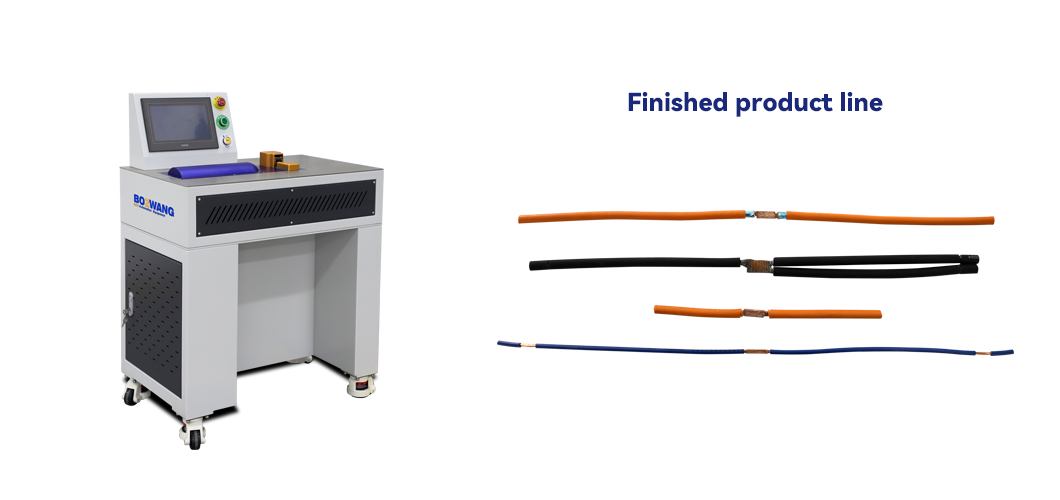
BOZWANG introduces its Precision Ultrasonic Wire Harness Welding Machine. This system replaces old crimping and tinning with copper joins that have zero added resistance. Why is this machine a game changer? It offers MES readiness and a portable design in one platform. The models include the BZW-9A, BZW-9A-02, BZW-9B, and BZW-9C. Each unit handles wire harness welding with steady acoustic control and full traceability. BOZWANG supports every machine with an ISO-certified factory that covers 40,000 square meters with a building area of 45,000 square meters. The factory has over 500 workers and more than 100 invention patents, more than 100 utility model patents, and more than 100 design patents. For wire harness manufacturing teams, this launch means cleaner joints, faster production cycles, and direct support from the factory.
Key Takeaways
BOZWANG's ultrasonic welding machine offers 0.001-mm precision for complex wire harnesses.
It welds copper and aluminum wires that range from 2 to 35 mm², with zero resistance and no flux required.
Real-time tracking and MES integration make sure every weld can be fully traced.
The machine has an ISO certification and comes with spare-part support from the factory for life.
Workers can learn the touch screen in less than an hour. This helps them work faster and make fewer mistakes.
Ultrasonic Wire Harness Welding Machine Precision
An ultrasonic wire harness welding machine achieves the welding quality through a 20 kHz stable acoustic system. BOZWANG engineers developed the transducer, booster, and horn in-house. This vertical integration delivers consistent repeatability. Such control matters for complex wire harness welding tasks with multiple gauges and tight tolerances.
The system handles copper and aluminum conductors from 2 to 35 mm². Every weld creates a true metallurgical bond with zero added resistance. There is no flux smoke and no consumable material. This performance sets a new standard for wire harness welding in demanding production environments.
Each ultrasonic wire harness welding machine includes an MES uplink. Weld data flows directly to the factory management system. Operators trace every joint to its time, power, energy, and pressure settings. This traceability supports ISO 9001 quality documentation.
The table below shows the key specifications.
Performance Metric | Specification |
|---|---|
Ultrasonic frequency | 20 kHz |
Cycle time (production efficiency) | 120–150 pieces/hour |
Conductor size range | 2–35 mm² |
Ultrasonic power | 4000 W |
Applicable material | Copper or aluminum wire to copper terminal |
These numbers come from standard bench tests. Production rates vary with part geometry and operator skill. Still, the platform delivers consistent results across shifts.
Repeatability for Complex Harnesses
Complex wire harnesses contain many conductor sizes. An assembly may combine 2 mm² signal wires with 35 mm² power cables. The weld head must adapt to each change without manual adjustment. BOZWANG achieves this through the acoustic stack. The transducer converts electrical energy to mechanical vibration at 20 kHz. The booster amplifies the motion. The horn delivers energy to the weld zone. Each component matches the others with exact tolerances.
The result is unparalleled precision. Each weld applies the same vibration amplitude and clamping force. The controller monitors the welding process in real time. If a wire strand shifts, the system adjusts energy to maintain joint strength. This precise welding ability reduces scrap and rework.
Faster Cycle Times Without Sacrificing Quality
Cycle time directly affects production cost. The system completes 120 to 150 welds per hour. That rate matches many crimping press lines. The difference is joint quality. A crimped connection loosens over time. An ultrasonic weld forms a solid-state bond. There is no thermal damage and no resistance increase.
BOZWANG designs the controller to hold weld energy within tight limits. The machine does not rush. It uses a short, high-energy burst to fuse materials. The result is efficient welding without overheating insulation. Operators see consistent pull-test values from first weld to last. This efficient and stable welding performance keeps production moving.
The portable BZW-9A-02 model shares the same weld algorithm as stationary units. A team runs the same process on the bench and on the floor. No recalibration is needed. The learning transfers directly between machines. This design supports automated wire harness welding cells with consistent results.
Precision and efficiency come together in this platform. Teams get the throughput of an automated line with the accuracy of a laboratory instrument.
Reliable Wire Harness Welding
Reliability in wire harness welding comes from two things: seeing the process as it happens and having certified quality from the factory. BOZWANG puts both into every ultrasonic wire harness welding machine. The system watches each weld, keeps records of every setting, and sends out machines that meet many international standards. This way, it gives steady, high-quality results through all production runs.
Real‑Time Monitoring and Full Weld Traceability
A weld that looks fine on the outside may hide problems inside. BOZWANG removes this doubt with a system that uses many sensors. Digital sensors check tool health and warn workers about wear before a breakdown. Built-in load cells make sure the clamping force is right for each cycle. Distance measurement tools track how much the weld material compresses, to confirm it is correct.
The welding process records power, time, force, and displacement data from each joint. Adaptive data monitoring software lets production teams watch performance live and helps the support team fix problems from afar. Ongoing cycle tracking catches mistakes early, stopping bad parts from moving ahead. A Manufacturing Execution System (MES) links all this information. Process numbers, tool wear records, and part history all go into one database.
The following table summarizes the monitoring technologies and their roles.
Monitoring Technology | Role in Traceability |
|---|---|
Continuous cycle performance tracking | Detects errors early, stops defective parts from advancing |
Digital sensors | Monitors tool wear, supports predictive maintenance |
Adaptive data monitoring software | Enables real-time tracking and remote troubleshooting |
Integrated load cells | Verifies correct clamping force during each cycle |
Distance measurement devices | Confirms desired compaction through displacement measurement |
Power, time, force, displacement monitoring | Confirms joint stays within defined parameters |
MES integration | Links process metrics, tool wear, and part traceability |
This network of monitors gives engineers full trust in each joint. If a customer asks about a weld from six months ago, the team can find the exact power curve, force reading, and displacement number. No guessing, no re-checking. Full traceability becomes a useful tool for any wire harness welding job.
ISO‑Certified Quality Under a Trusted Factory Brand
BOZWANG sends out every ultrasonic wire harness welding machine with a full set of certifications. ISO 9001:2015 controls the quality system for design, making, and support. ISO 14001 deals with environmental management. ISO 45001:2018 makes sure there are safe workplace rules and health protection. CE marking shows the machine meets the Machinery Directive and EMC Directive.
The table below shows each certification and its benefit.
Certification | Scope / Coverage | Benefit |
|---|---|---|
ISO 9001:2015 | Quality management for design, manufacturing, support | Consistent output and manufacturing reliability |
ISO 14001 | Environmental management system | Demonstrates environmental responsibility |
ISO 45001:2018 | Occupational health and safety | Safe operator performance, industry-leading workplace safety |
CE – Machinery Directive | EN ISO 12100 / EN 60204-1 Safety of Machinery | Hassle-free EU export, EU safety compliance |
CE – EMC Directive | EU Electromagnetic Compatibility | Compatibility for automotive and communication equipment |
The portable BZW-9A-02 model uses the same weld-energy program as the stationary machines. This steady wire harness welding gives the same quality on the bench and on the floor. No need to recalibrate between stations. This steadiness makes it easy to check the process and train workers.
BOZWANG supports every machine with round-the-clock help from its Changzhou base. Lifetime spare-part service means a machine bought today will work for years. This factory-direct way gives buyers factory prices and direct contact with engineers. The result is a wire harness assembly that is dependable and meets the high standards needed by car, EV-battery, and communication harness makers.
Ultrasonic Wire Harness Usability
Operators on the production floor mainly care about speed and avoiding mistakes. BOZWANG designs the ultrasonic wire harness welding machine for that purpose. The control system uses simple language. A worker touches the screen, chooses a recipe, and starts the weld. No programming skills are needed.
Intuitive Touch HMI and Recipe Storage
The machine has a high-definition touch-screen that is easy to use. The interface stores more than 100 sets of settings and weld histories. Each record includes amplitude, energy, time, and alarm data. This storage lets workers quickly switch between different harness part numbers. An operator picks a saved recipe, and the system loads all settings automatically.
Custom cloud services add more ease of use. The platform supports remote OEE monitoring, fault alerts, and traceability for quality checks. When a customer needs to check that every weld on a batch was done right, the team can get that data right away. Real-time alarms protect against over-voltage, over-current, over-temperature, and weld overload. These alerts stop the cycle before a bad joint forms.
Flexible Portable and Stationary Models
The portable BZW-9A-02 unit can work next to a BZW-9A harness cell or a BZW-9B terminal welder without recalibration. Both portable and stationary frames use the same weld-energy program. A team can weld on the bench, move to the floor, and come back without changing any settings. This flexibility boosts efficiency across shifts and stations.
This platform needs very little training compared to older welding equipment. A new worker can learn the touch screen in less than an hour. The recipe system takes away guesswork. The machine does the rest. For shops with mixed production, this ease of use means lower labor costs and fewer setup mistakes.
Ultrasonic Wire Harness Welding Applications
Ultrasonic wire harness welding works for many industries that need strong electrical connections. This welding method joins copper and aluminum without melting the base metals. This solid-state process makes clean joints with no flux residue. Manufacturers use this technology in automotive, aerospace, medical, and energy fields.
The table below shows the main industrial applications.
Industry / Application | Description |
|---|---|
EV Battery Harnesses & Busbars | High-current links between battery modules and power distribution units |
Powertrain & Engine Compartment | Vibration-resistant connections for electric and combustion platforms |
ADAS & Sensor Harnessing | Low-resistance signal paths for radar, lidar, and ultrasonic sensors |
Aerospace Avionics & Communication | High-density harnessing with fail-proof reliability in flight-critical environments |
Battery Management System (BMS) | Precision-terminated sensing lines inside lithium-ion battery packs |
Alternative Energy & Grid Systems | PV combiner boxes, inverter terminals, and energy storage systems |
Ultrasonic welding is used as a key process for custom wire harnesses where mechanical strength, electrical flow, and exact size are critical. This solid-state joining method makes clean, high-performance welds without extra materials, so it is perfect for uses that demand zero-compromise reliability.
Automotive and EV‑Battery Assembly
Car manufacturing depends on ultrasonic welding for strong, low-resistance connections. The welding process creates strong, vibration-resistant joints that hold up in harsh vehicle conditions. Low and steady electrical resistance supports sensor and control circuit reliability. No flux residue removes a known cause of long-term corrosion.
Copper and aluminum compatibility supports lightweighting efforts. Automobile wire harnesses gain from lower warranty and recall risk through consistent, validated joint quality. Low-resistance, low-heat joints serve high-current EV and hybrid power wiring. The ultrasonic wire harness welding machine handles these tough tasks with precision.
Electronics, Aerospace, and Communication Harnesses
Electronics and telecom uses connect data and signal wires that need secure, reliable connections. Spot welding for PCBs and sensors secures leads while reducing heat impact on nearby circuits. Ultrasonic vibration replaces constant external heat, protecting insulation and components. Clean, consistent welds need no solder, flux, or adhesives.
Aerospace and defense sectors use ultrasonic wire harness welding in aircraft wiring systems where safety and reliability matter most. Harnesses meet strict quality standards for flight-critical environments. Medical imaging and diagnostics also rely on these dependable assemblies.
BOZWANG offers OEM/ODM customization options for specific production needs. This sustainable approach supports green manufacturing goals across industries.
BOZWANG’s ultrasonic wire harness welding machine is precise and efficient. It comes with ISO‑backed reliability and is easy to use. This machine makes stronger joints that conduct electricity better and weigh less. This efficiency and better quality improve performance in many tasks. The ultrasonic welder gives a factory‑direct cost advantage with lifelong support. Switching to it lowers running costs and gets you ready for future production. Go to the BOZWANG website or contact the sales team for a demo or a quote.
FAQ
What is the typical lifespan of the ultrasonic components?
The transducer, booster, and horn are checked often by digital sensors. BOZWANG gives spare-part support for life. With regular cleaning and checking, these parts work well for many years.
How does this machine maintain consistency across shifts?
The 20 kHz sound system and MES link keep weld settings steady. Stored recipes remove the need to adjust by hand between runs. The portable BZW-9A-02 uses the same program as fixed machines.
Can the wire harness welding process work with aluminum?
Yes. The machine works with copper and aluminum wires from 2 to 35 mm². The solid-state weld makes zero added resistance and no leftover flux. This helps make cars and EVs lighter.
What training do operators need for this equipment?
Workers learn the touch screen and recipe system in under an hour. The HMI holds more than 100 recipe sets. They pick a saved recipe, and the machine loads all settings on its own.
What after-sales support does BOZWANG provide?
BOZWANG gives round-the-clock help from its Changzhou office. Each machine comes with ISO certificates. Lifelong spare-part service keeps the machine working for years after buying.


View More(Total0)Comment lists